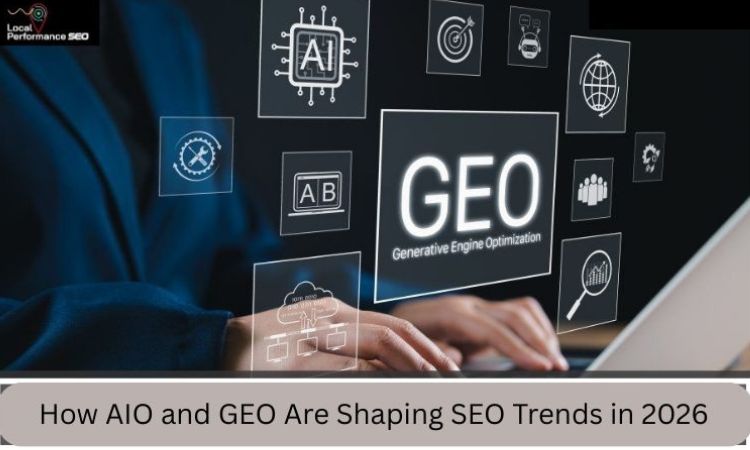
iNTRODUCTION TO AIO and GEO SEO
Search engine optimization is entering one of its most transformative phases yet. As we move into 2026, two powerful forces— AIO and GEO SEO —are redefining how search engines understand users, content, and intent.SEO tactics alone are no longer enough to maintain visibility, especially for local performance-driven brands. At local performance SEO, we closely track how emerging technokogies influence search behavior and rankings. In this guide, we’ll break down how AIO and GEO SEO trends in 2026, why they matter, and how businesses can adapt to stay competitive in an AI-first, location-aware search ecosystem.
Understanding AIO and GEO: The New SEO Drivers
SEO in 2026 is no longer just about keywords and backlinks. Search engines now rely on advanced AI models and real-world location signals to deliver hyper-relevant results. Understanding AIO and GEO is the foundation for modern optimization strategies.
What Is AIO (Artificial Intelligence Optimization)?
Artificial Intelligence Optimization refers to the use of AI systems to improve how content is created, evaluated, ranked, and optimized. Search engines increasingly use AI to understand user intent, content quality, and satisfaction signals at scale.
Before diving into its applications, it’s important to understand that AIO doesn’t replace SEO—it enhances it by making optimization smarter and more predictive.
- AI-driven content analysis and quality scoring
- Automated intent matching beyond exact keywords
- Real-time optimization based on user engagement data
What Is GEO (Geospatial Optimization)?
Geospatial Optimization focuses on using location data to deliver contextually relevant search results. It goes beyond traditional local SEO by factoring in proximity, movement patterns, and real-world user behavior.
As users increasingly search on mobile devices, GEO allows search engines to tailor results based on where users are—and where they’re likely going.
- Proximity-based ranking signals
- Location-specific intent modeling
- Hyper-local personalization of search results
How AIO and GEO Work Together
AIO and GEO SEO are most powerful when combined. AI systems analyze massive datasets, while geo-signals provide context that makes results more meaningful for users.
Together, they allow search engines to predict what a user wants based on both behavior and location, creating a more personalized and accurate search experience.
- AI predicts intent while GEO refines relevance
- Location data strengthens AI decision-making
- Personalized SERPs based on context, not just queries
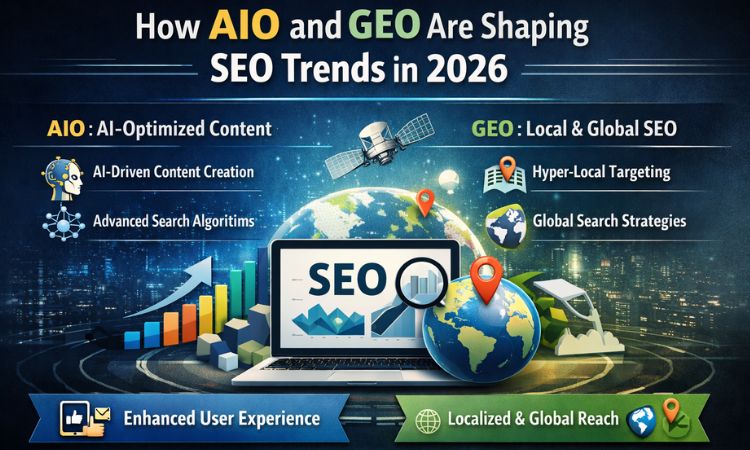
Core Ways AIO Is Reshaping SEO in 2026

Artificial intelligence now plays a central role in how rankings are determined. Search engines no longer rely on static algorithms but continuously learn and adapt.
Predictive Search and User Intent Modeling
Instead of reacting to queries, AI systems anticipate them. Predictive search uses behavioral data, browsing history, and context to surface results before users fully articulate their needs.
This shift forces brands to focus more on intent coverage than keyword density.
- Content must address problems, not just queries
- Intent clusters outperform single-keyword pages
- User satisfaction becomes a dominant ranking factor
Automated Content Performance Optimization
AI now evaluates how content performs after publication. Pages are continuously assessed based on engagement, dwell time, and conversion behavior.
At LocalPerformanceSEO, we see performance-based optimization replacing static SEO audits.
- AI suggests content improvements in real time
- Headlines, structure, and CTAs are refined automatically
- Underperforming pages are dynamically adjusted
Machine Learning in Ranking Signals
Machine learning enables search engines to test, validate, and evolve ranking factors without manual updates. This makes SEO more fluid—and more competitive.
The emphasis shifts toward long-term value rather than short-term tactics.
- Quality outweighs keyword manipulation
- Brand authority and trust signals gain importance
- Consistent user engagement drives rankings
How GEO Optimization Is Evolving Local Search
Local search is no longer just about city names and Google Business Profiles. GEO optimization brings precision and personalization to local SEO strategies.
Hyper-Local Relevance as a Ranking Factor
Search engines now distinguish between neighborhoods, streets, and even buildings. “Near me” searches are interpreted with far greater accuracy than before.
This change is especially impactful for service-based and brick-and-mortar businesses.
- Micro-location targeting improves visibility
- Proximity influences rankings more than ever
- Real-world visits validate online relevance
Geo-Semantic Context Mapping
AI connects places with meaning. Search engines understand not just where a business is located, but what it represents within its geographic context.
For example, a restaurant may rank higher because it’s associated with popular landmarks or local culture.
- Semantic place associations boost relevance
- Local entities strengthen topical authority
- Contextual relevance improves discovery
Personalization Based on Geo-Behavior
Search results now vary based on a user’s historical movement patterns. Someone commuting daily may see different results than a tourist in the same area.
This level of personalization demands smarter local SEO strategies.
- Results adapt to user routines
- Location history influences rankings
- Time-based geo signals affect visibility
AIO and GEO: Practical SEO Strategies for 2026
Understanding trends is only valuable if businesses can act on them. AIO and GEO SEO require a shift in how SEO strategies are planned and executed.
AI-Powered Local Keyword and Intent Research
AI tools can now cluster keywords by intent and location, revealing opportunities traditional research misses.
This allows brands to create content that aligns with how users actually search.
- Intent-based keyword grouping
- Location-modified long-tail opportunities
- Predictive keyword discovery
Geo-Enhanced On-Page Content
Static pages are giving way to dynamic, location-aware content. Pages adapt messaging based on user location to increase relevance and conversions.
At LocalPerformanceSEO, we recommend blending GEO signals with strong on-page SEO fundamentals.
- Location-specific content blocks
- Local schema and entity markup
- Contextual internal linking
AI-Driven Local SERP Testing
AI can automatically test titles, meta descriptions, and CTAs across different locations to find what performs best.
This reduces guesswork and speeds up optimization cycles.
- Automated A/B testing
- Geo-specific performance insights
- Data-backed optimization decisions
Competitive Insights Through Geo-AI
AI can map competitor visibility across locations, revealing gaps and opportunities.
This is especially valuable for multi-location or regional businesses.
- Local competitor benchmarking
- Geo-based performance comparisons
- Opportunity-driven expansion strategies
Impact on Local Businesses and Marketers
The rise of AIO and GEO SEO changes how success is measured. Rankings alone are no longer enough.
ROI Expectations in an AI-Driven SEO World
SEO in 2026 is faster, more precise, and more measurable. Businesses can see results sooner when strategies align with AI and geo trends.
- Higher-quality leads
- Improved conversion rates
- Faster optimization feedback loops
New Performance Metrics to Track
Traditional metrics must be supplemented with AI and geo-based indicators.
- Geo-engagement rates
- Local conversion signals
- User satisfaction and retention
Skills and Team Evolution
SEO professionals must adapt. AI literacy and geo-analytics are now essential skills.
At LocalPerformanceSEO, we emphasize continuous learning to stay ahead of algorithmic change.
- Understanding AI tools
- Interpreting geo-data
- Strategic decision-making
Challenges and Ethical Considerations
Despite the benefits, AIO and GEO SEO present challenges. Over-automation can reduce authenticity, and privacy concerns must be addressed responsibly.
- Transparent data usage
- Ethical AI implementation
- Balance between automation and human insight
Future Predictions Beyond 2026
Looking ahead, AIO and GEO will integrate even more deeply with emerging technologies.
- Voice and AR-based local search
- Real-time SERP personalization
- Predictive, intent-first optimization
Conclusion of AIO and GEO SEO
AIO and GEO are not passing trends—they represent the future of SEO. In 2026, success depends on how well brands align with AI-driven insights and location-based relevance.
By adopting these strategies early, businesses can gain a lasting competitive edge. At LocalPerformanceSEO, we help brands navigate this evolving landscape with performance-focused, future-ready SEO solutions.
Contact Us of AIO and GEO SEO
Looking to improve your local visibility and dominate AI-driven search results? Our expert team specializes in AIO and GEO SEO strategies designed for local performance. We help businesses attract nearby customers, optimize for AI search engines, and convert traffic into real leads. Whether you’re a small local business or a multi-location brand, we create customized SEO solutions that deliver measurable results. Contact us today to enhance your online presence, improve local rankings, and stay ahead in the evolving world of search optimization.
FAQs of AIO and GEO SEO
Q1.What is the difference between AIO and traditional SEO?
Ans: AIO focuses on optimizing content for AI-driven search systems, while traditional SEO mainly targets keyword-based rankings.
Q2.Is GEO SEO important for small businesses?
Ans: Yes, GEO SEO is crucial for small and local businesses to attract nearby customers and increase local visibility.
Q3.Can AIO and GEO SEO improve conversions?
Ans: Absolutely. These strategies target high-intent users, leading to better engagement and higher conversion rates.
Q4.How long does it take to see results?
Ans: Local SEO improvements can be seen within a few weeks, while long-term authority builds over several months.

